









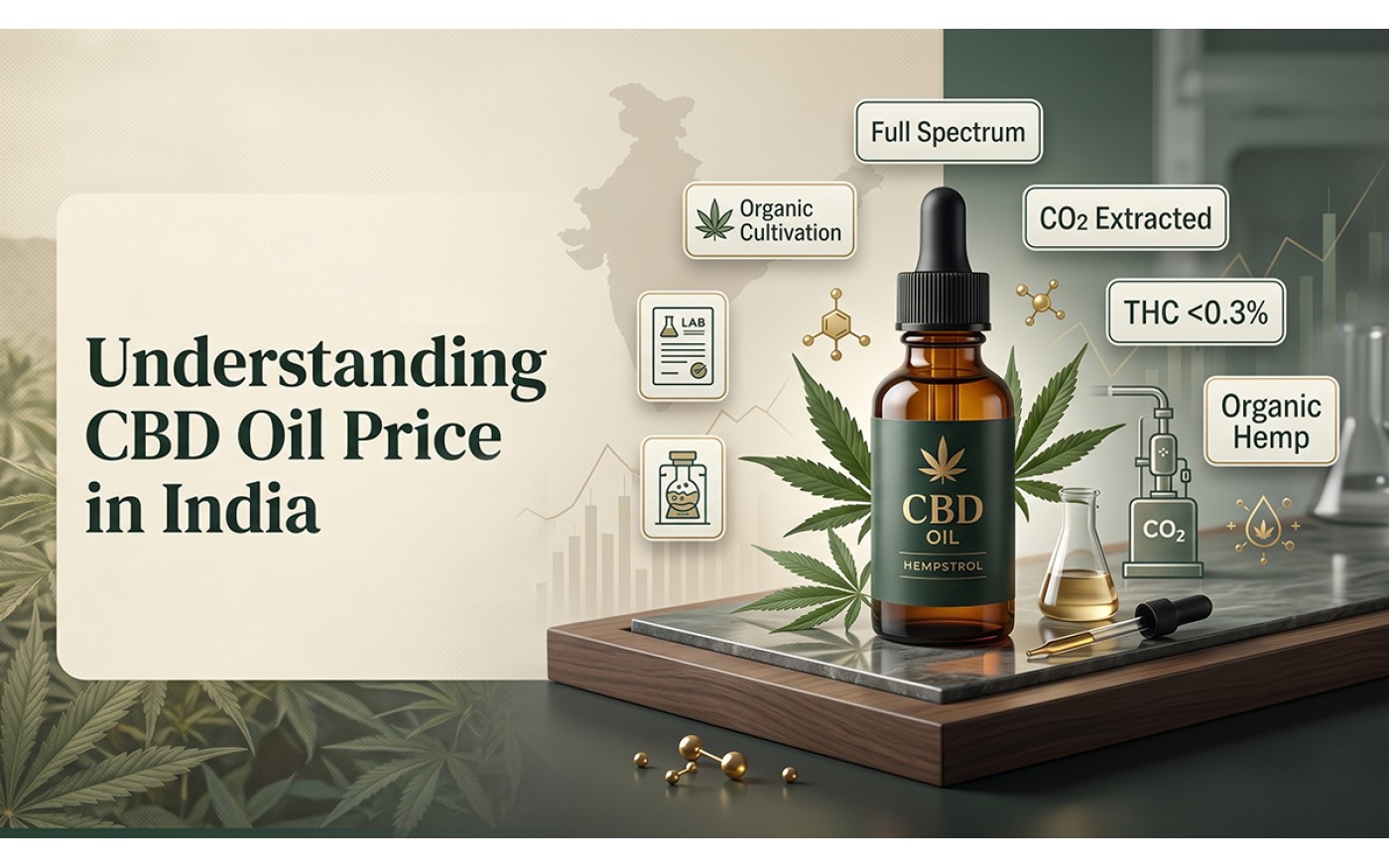
Understanding CBD Oil Price in India: Factors That Affect Cost
Shopping for CBD oil in India can feel genuinely confusing. Two products sitting side by side on a website carry completely different price tags. One bottle costs ₹1,500, another costs ₹6,000, and both claim to deliver the same benefits. So what is actually driving that gap? Understanding CBD oil price in India comes down to a handful of real, practical factors that directly affect what goes into the bottle, how it was made, and whether it is worth buying at all. This guide breaks each of those factors down in plain, straightforward terms so buyers can make smarter decisions.
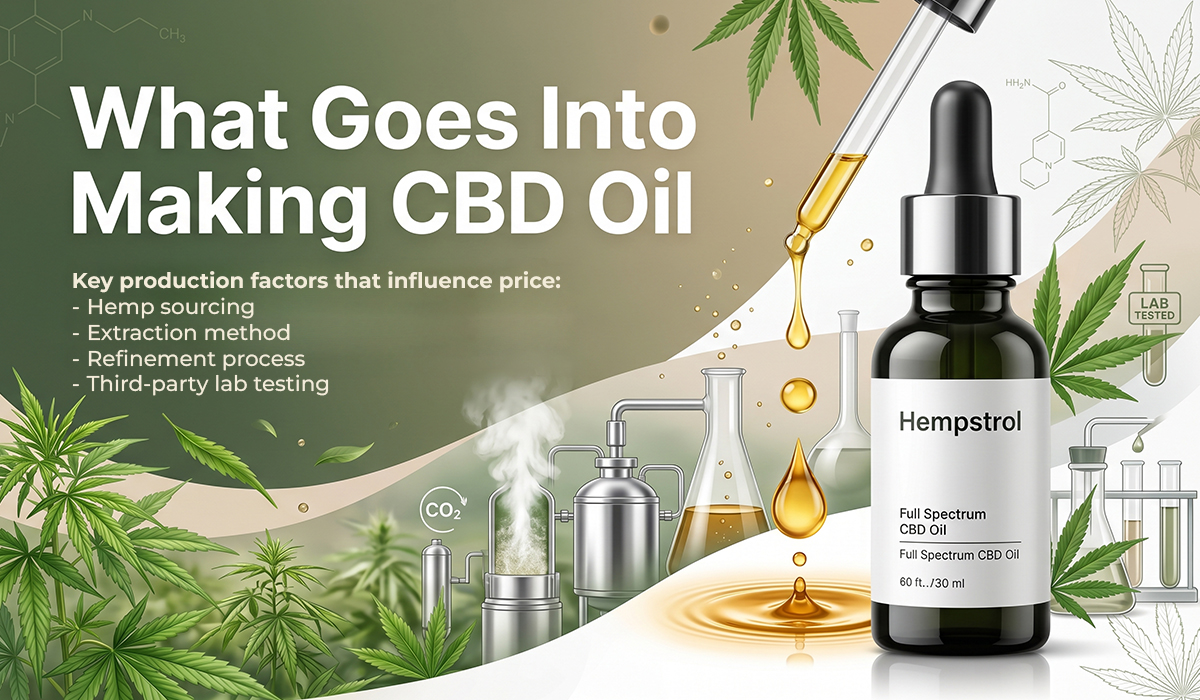
What Goes Into Making CBD Oil
Before looking at pricing, it helps to understand what CBD oil is and how it gets produced.
CBD (cannabidiol) is extracted from hemp plants. The quality of that hemp, the extraction method chosen, and how the final product is processed all shape both quality and cost.
Key production factors that influence price:
Hemp sourcing: Hemp grown under certified, controlled conditions costs more to cultivate. Budget oils often rely on lower-grade raw material sourced without quality checks.
Extraction method: CO2 extraction is widely regarded as the cleanest approach. It preserves beneficial compounds without leaving harmful residue behind. It is also more expensive than solvent-based alternatives.
Refinement process: Broad-spectrum and isolate oils need additional processing steps to remove unwanted compounds, which adds time and cost.
Third-party lab testing: Reputable brands test every batch through independent labs. That testing is not free, and it should be reflected in the price.
The Concentration Factor
One of the most significant reasons CBD oil price varies between products is concentration, specifically how many milligrams of CBD are actually present in the bottle.
A 30ml bottle containing 500mg of CBD will naturally cost less than a 30ml bottle containing 2000mg. This seems straightforward, yet many buyers compare bottle prices without checking the mg content, which leads to poor purchasing decisions.
A simple way to calculate actual value:
Divide the price by the total milligrams of CBD in the bottle. This gives the cost per mg, which is the only honest way to compare two products side by side.
For example:
Product A: ₹2,000 for 500mg = ₹4 per mg
Product B: ₹4,500 for 1500mg = ₹3 per mg
Product B costs more upfront but delivers better value per dose.
Full Spectrum vs. Broad Spectrum vs. Isolate
The type of CBD extract inside a product also plays a role in pricing.
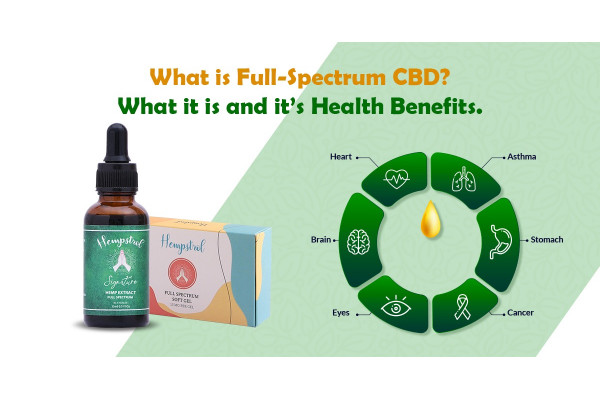
Full spectrum: Contains CBD alongside other cannabinoids, terpenes, and trace THC within legal limits. More complex to produce and generally priced higher.
Broad spectrum: Retains multiple cannabinoids but with THC removed through additional processing steps.
Isolate: Pure CBD with everything else stripped away. Simpler to produce and usually more affordable, though it lacks the combined effect that other compounds contribute.
Full spectrum products typically sit at a higher price point because preserving the plant's natural profile requires careful, controlled processing throughout production.
Legal Landscape and Its Effect on Pricing
India's regulatory framework around hemp-derived products has a direct influence on what brands charge. Hemp-derived CBD with less than 0.3% THC is not treated the same way as cannabis under the NDPS Act, but the compliance path for manufacturers remains demanding.
Licensing requirements, quality audits, and import regulations for brands sourcing hemp internationally all add to operational costs. Those costs are eventually passed on to the buyer.
This is also where THC oil India conversations frequently arise. Some consumers confuse CBD oil with THC-heavy products. In India, THC-dominant products fall under strict legal restrictions. Legitimate CBD brands must stay within permissible THC thresholds, which requires ongoing testing and documentation, adding another real cost layer to the final product price.
Brand Reputation and Transparency
A higher price tag does not automatically mean a better product. However, brands that consistently invest in the following tend to charge more because they are absorbing genuine costs:
Detailed certificates of analysis from independent third-party labs
Clear, accurate ingredient labeling with no hidden fillers
Verified and traceable hemp sourcing
Honest customer education rather than vague claims
Skipping any of these areas reduces a brand's operating costs. It also reduces the reliability and safety of what ends up in the buyer's hands.
Packaging, Carrier Oils, and Shelf Life
The carrier oil used in a CBD product affects both its effectiveness and its price. MCT oil, hemp seed oil, and olive oil are common choices, each carrying different costs. Premium carrier oils tend to improve bioavailability, meaning more CBD actually reaches the bloodstream after consumption.
Packaging choices matter too. Amber glass bottles with UV protection and proper sealing add to production costs but protect potency over the product's shelf life. Brands cutting costs on packaging are often cutting costs elsewhere as well.
Make a Smarter Purchase with Hempstrol
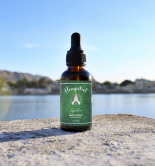
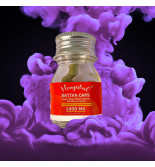
Finding a brand that is straightforward about ingredients, production standards, and pricing is genuinely difficult in a market that is still taking shape. Hempstrol offers hemp-derived CBD products that are lab-tested, clearly labeled, and priced to reflect actual quality rather than brand hype. Whether purchasing for the first time or moving on from a product that stopped delivering results, Hempstrol provides a dependable starting point. Every product comes with accessible lab data, so there is no guesswork about what is inside the bottle. The pricing reflects real production inputs, and the transparency reflects a brand built on honesty. Visit Hempstrol to explore the full range.
Frequently Asked Questions
1. Is CBD oil legal to buy in India?
Hemp-derived CBD oil with compliant THC levels is legally available in India through licensed and regulated brands.
2. Why is some CBD oil much cheaper than others?
Lower prices usually reflect lower concentration, cheaper extraction methods, or absence of third-party lab testing.
3. How much CBD oil should a beginner start with?
Beginners are generally advised to start low, observe effects, and adjust gradually based on individual response.
4. Does a higher price always mean better quality?
Not always. Always check lab reports, CBD concentration, and extraction method before making any purchase decision.
5. How should CBD oil be stored after opening?
Store in a cool, dark place away from direct sunlight to preserve potency and extend shelf life effectively.